In today’s fast-paced manufacturing world, precision, efficiency, and consistency are vital. One area that has witnessed massive transformation is metal fabrication, and the credit goes to advanced equipment like the 3 Roller and 4 Roller Hydraulic Plate Bending Machines. These machines have completely redefined the way industries handle metal bending tasks-making it faster, more accurate, and less labor-intensive.
In this blog, we will explore how 3 & 4 roller hydraulic plate bending machines are revolutionizing the metal fabrication industry, their working principles, benefits, comparisons, and real-world applications.
What Is Plate Bending in Metal Fabrication?
Plate bending is a process where a flat metal sheet is bent into a curved or cylindrical shape using mechanical or hydraulic force. It’s essential in industries like:
Shipbuilding
Construction
Automotive
Energy & power
Aerospace
Industrial equipment manufacturing
The evolution from manual to hydraulic systems has brought greater control, safety, and productivity.
Introduction to Hydraulic Plate Bending Machines
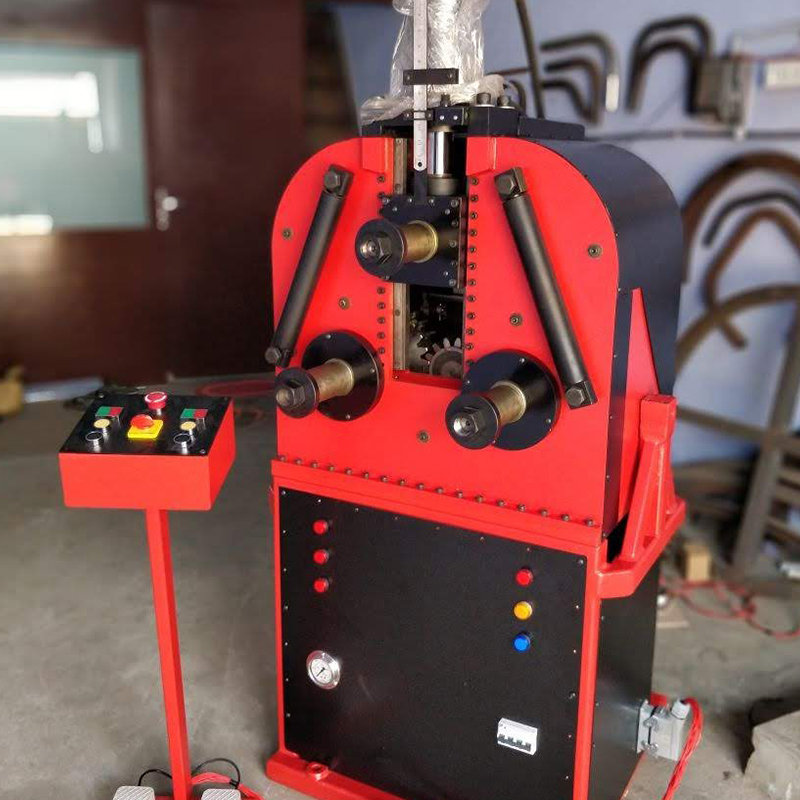
Unlike mechanical systems that rely on gear-driven force, hydraulic plate bending machines use pressurized fluid power for smooth, powerful, and precise bending operations. These machines are categorized primarily as:
3 Roller Hydraulic Plate Bending Machines
4 Roller Hydraulic Plate Bending Machines
Each has distinct advantages and applications.
Working of 3 Roller Hydraulic Plate Bending Machines
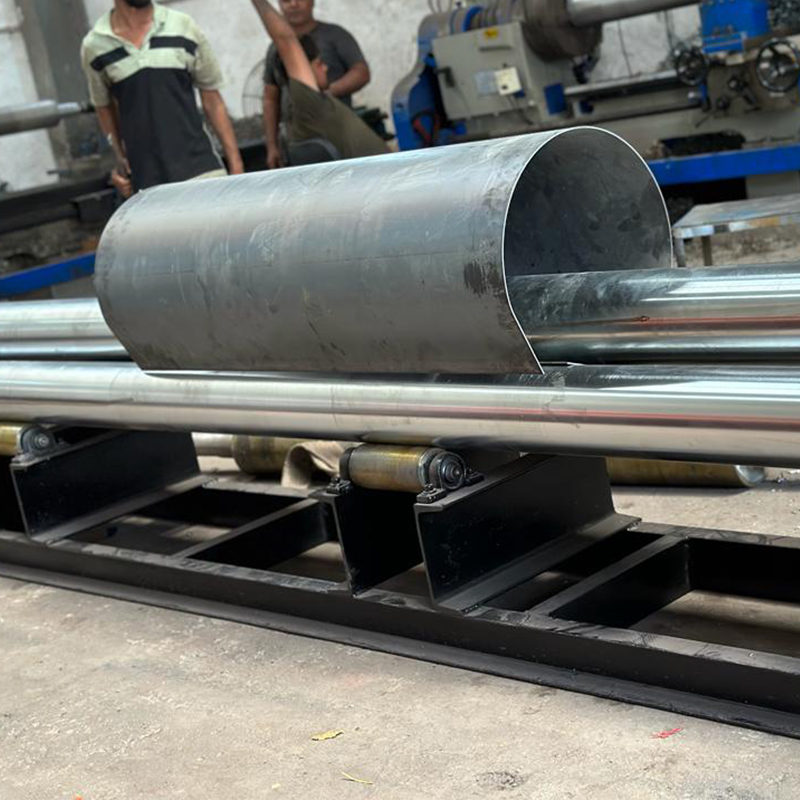
The 3 roller hydraulic plate bending machine consists of two bottom rolls and one top roll. Here’s how it works:
Initial Pinch: The sheet is positioned between the top and one bottom roll. The top roll moves downward, clamping the sheet.
Pre-Bending: One of the lower rolls lifts to start the bend before rolling begins.
Rolling: The sheet is passed through the rolls, creating the required arc.
Key Features:
High accuracy in creating cylinders and cones
Hydraulic synchronization of the rolls
Compact structure and strong frame
Suitable for medium to heavy-duty bending
Working of 4 Roller Hydraulic Plate Bending Machines
In a 4 roller machine, there are two side rolls, one top roll, and one bottom roll. The 4th roll adds flexibility and support.
Pre-bending on both ends of the plate without removing the sheet
The plate is clamped between the top and bottom rolls
Side rolls apply pressure to bend the sheet as it moves through the rollers
Key Features:
Full automation possible
Minimal manual handling
Superior alignment and flatness
Ideal for precise and repeatable batch production